
Table of Contents
You’ve probably been told that better time management is the secret to productivity, but there’s more to working efficiently than simply organizing your schedule. Focusing on managing your energy—rather than just your time—helps you get more done without burning out.
Instead of squeezing more tasks into each hour, shifting your attention to when you feel most alert, focused, and motivated can make a real difference.

Energy management means paying attention to your body’s natural rhythms and using your peak moments for your most important work. When you learn to align your tasks with your energy levels, you can maintain better performance and creativity, even as demands increase.
Key Takeaways
- Managing energy is more effective for productivity than just managing time.
- Align important work with your highest energy periods.
- Prioritizing rest and well-being helps you stay productive and avoid burnout.
Understanding Time Management

Making the most of your limited hours requires clear strategies and focused routines. Using time wisely starts with understanding what time management is, practicing specific tools and techniques, and recognizing common misconceptions.
What Is Time Management?
Time management means organizing and planning how you spend your hours to get more done in less time. Instead of working harder, you learn to work more efficiently by dividing your day according to tasks and goals.
The basics of time management include setting priorities, creating schedules, and tracking deadlines. You identify which tasks are urgent, which are important, and which can wait.
This helps you accomplish essential work before distractions or interruptions interfere. Key skills include making a realistic to-do list and resisting the urge to multitask, which can lower your efficiency.
By developing your ability to allocate hours wisely, you can reduce stress and improve your daily workflow.
Effective Time Management Techniques
Applying proven techniques will help you use your time with purpose. Time blocking, for example, involves assigning fixed periods to specific tasks.
This reduces wasted minutes spent deciding what to do next. Another strategy is the Eisenhower Matrix, which separates tasks into four categories:
- Urgent and important
- Important but not urgent
- Urgent but not important
- Neither urgent nor important
This visual method guides you to prioritize better and avoid spending time on low-value work. Stop multitasking; focusing on one task at a time leads to better results and fewer errors.
Maintaining a clear to-do list gives you structure and helps you track progress. Planning your day in advance, even in short blocks, adds clarity and control.
Reviewing what you have accomplished and updating your plan keeps you moving forward.
Time Management Myths
There are several misconceptions about time management that may hold you back. One is the belief that multitasking saves time.
Evidence suggests it actually lowers productivity and increases mistakes. Another myth is that good planning means every minute must be scheduled.
Flexible blocks and buffer time for unexpected issues are just as important as strict routines. Some people think time management requires elaborate tools or technology.
In reality, simple habits—like writing daily priorities or using a basic calendar—are often the most effective. The key lies in practicing consistency rather than relying on complex systems.
Exploring Energy Management

Energy management is about maximizing your productivity by aligning tasks and breaks with your natural energy cycles. By prioritizing high-energy tasks and strategically planning restorative breaks, you can reduce stress and work more efficiently.
What Is Energy Management?
Energy management focuses on how you use and replenish your physical, mental, and emotional energy throughout the day. Rather than only tracking hours worked, you pay attention to how energized you feel at different times.
This approach helps you avoid burnout and maintain more consistent peak performance. Managing energy involves understanding your own patterns and making choices that protect your energy reserves.
It means integrating restorative practices, like short walks or stretching, instead of pushing through fatigue. The goal is to do better work, not just more work, by matching demands to your energy availability.
Managing Energy Cycles
Your energy cycles, or ultradian rhythms, naturally rise and fall throughout the day. Recognizing when your energy peaks and dips allows you to adjust your schedule for maximum impact.
Most people experience higher energy levels in the morning or after breaks, and lower energy in the early afternoon. By scheduling demanding tasks during your personal energy peaks, you can improve both efficiency and accuracy.
During energy dips, brief restorative breaks or lighter activities help you recharge. Keeping a log of your daily energy levels can help you identify patterns and fine-tune your routine.
Sample Energy Cycle Table
| Time of Day | Typical Energy Level | Suggested Activity |
|---|---|---|
| 8:00–10:00 AM | High | Focused, complex tasks |
| 1:00–3:00 PM | Low | Routine, simple work |
| 3:00–5:00 PM | Rising | Creative work, meetings |
Identifying High-Energy Tasks
High-energy tasks are activities that require focus, creativity, or decision-making. Identifying these tasks lets you assign them to periods when your energy is at its peak.
Examples include strategy planning, problem-solving, or writing detailed reports. List out your major responsibilities and mark those that demand your full attention or intensive thinking.
Tasks that feel mentally taxing or produce the highest value for your work should be done when your energy reserves are fullest. Pairing the right tasks with the right energy windows can help you accomplish more with less effort.
This approach also reduces mistakes and the frustration of struggling through complex work during energy slumps.
Energy Management vs. Time Management: Key Differences
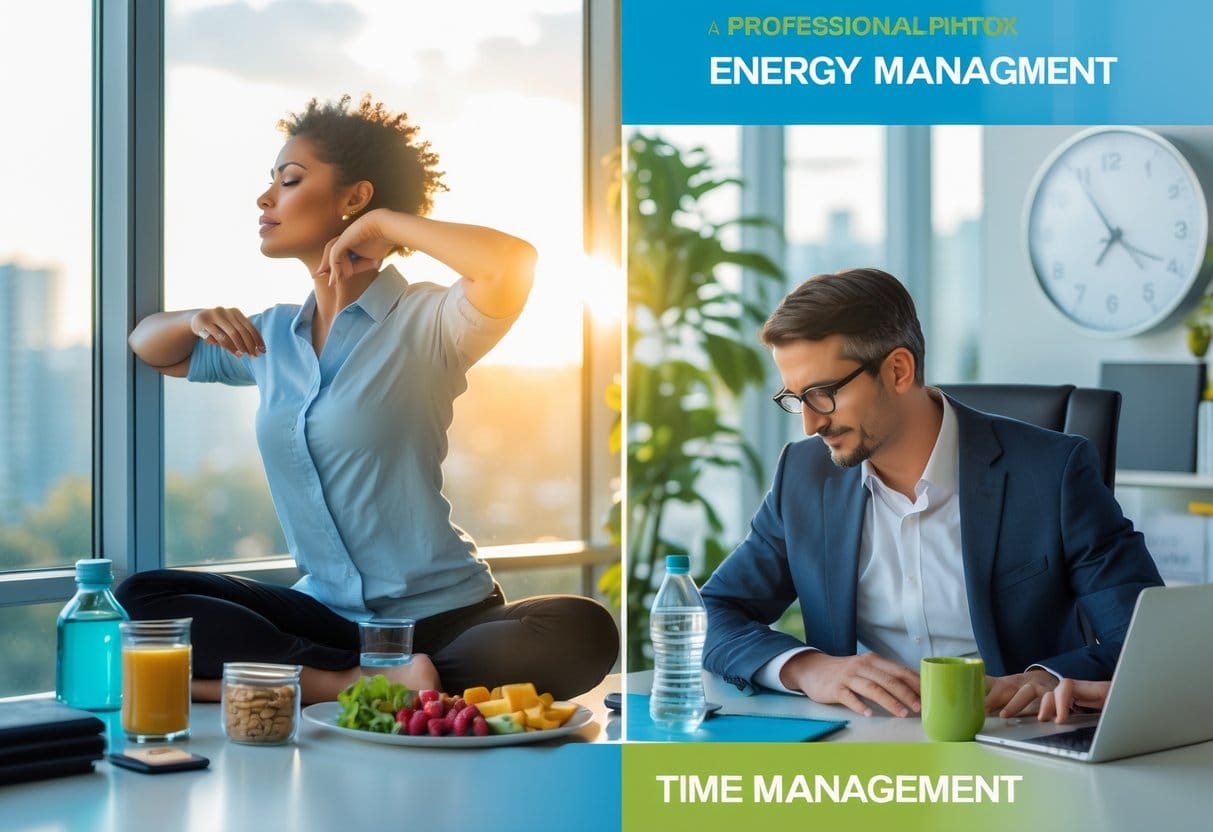
Energy management and time management both aim to improve productivity and help you work smarter. These approaches differ in how they structure your day, address biological needs, and affect your work-life balance.
Approaches to Productivity
Time management focuses on allocating your hours to tasks using activities like calendars, lists, and schedules. It encourages you to divide your day into segments and complete tasks within those blocks, helping you prioritize and control deadlines.
Energy management, on the other hand, is about aligning demanding tasks with periods when you feel most alert, creative, or focused. Instead of sticking to a set timetable, you plan your workload around your natural energy peaks and lows.
This method lets you make better decisions about when to tackle specific activities, which can lead to higher-quality results. Time is a fixed resource—everyone has the same number of hours in a day.
Energy fluctuates, affected by your habits, environment, and personal rhythms. Managing your energy lets you use that variability to your advantage, making it possible to work smarter instead of just longer.
Impact on Work-Life Balance
Time management can encourage a packed schedule that leaves little room for rest or recovery. You may end up measuring success by how much you fit into your day rather than how effectively you accomplish your goals.
This can lead to exhaustion, especially if you treat evenings and weekends as time for catching up instead of unplugging. Energy management shifts the focus to maintaining your well-being as you pursue productivity.
When you prioritize tasks based on your energy levels, you build in time for breaks, exercise, and sleep. This approach supports sustainable working habits and helps prevent burnout by considering your physical and mental needs.
Choosing energy management can also help you set boundaries and improve decision-making about when and how to work. This often leads to better balance between your job and personal life because you’re less likely to overextend during low-energy periods.
Biological Factors
Your biology plays a significant role in energy management but matters less in traditional time management. Factors like sleep quality, nutrition, and environment directly impact when you feel sharpest throughout the day.
Circadian rhythms, or the body’s natural 24-hour cycles, influence attention, alertness, and even mood. If you pay attention to your individual rhythms, you can schedule high-focus work for your peak periods and save routine tasks for lower energy times.
Time management methods typically overlook these natural fluctuations. In contrast, energy management integrates an understanding of how your biology cycles, making it easier to boost effectiveness while reducing fatigue or lapses in concentration.
This biological alignment can help you make more informed choices about break times, task transitions, and workplace environment.
Best Practices for Working Smarter, Not Harder

Improving productivity often means organizing your workload and attention, so you can make better use of energy and time. Using effective strategies lets you focus on what matters most, reduce wasted effort, and maintain better engagement throughout the day.
Prioritization and Planning
Start by identifying your most important tasks using proven prioritization methods, such as the Eisenhower Matrix or ABCD approach. This makes it easier to distinguish urgent work from what can wait.
Create a detailed to-do list each day. Break down large projects into smaller, more manageable steps.
This structure will help you avoid feeling overwhelmed and allows you to see clear progress as items are checked off. Make planning a daily habit.
Allocate time for reviewing upcoming tasks at either the start or end of your workday. Setting SMART (Specific, Measurable, Achievable, Relevant, Time-bound) goals ensures your objectives are clear and attainable.
Consider using digital tools or apps to organize your lists, set reminders, and track your time. These tools can streamline planning and provide useful insights about how you spend your work hours.
Strategic Task Scheduling
Schedule challenging tasks during your peak energy periods, which may differ from standard working hours. Track when you feel most alert or focused, and block that time for priority work.
Practice time blocking: assign specific periods for deep work and limit meetings or interruptions. Incorporate breaks—short pauses or walks help prevent burnout and maintain sustained engagement.
Automate repetitive tasks whenever possible, using available software or workflow tools. Reducing manual work saves both time and mental energy, letting you concentrate on higher-value activities.
Review and adjust your schedule regularly. Shifting tasks based on what is or isn’t working allows you to refine your routine and improve overall effectiveness.
Boosting Performance Through Breaks and Recovery

Your ability to sustain high performance is affected by how you rest and recharge. Strategic breaks, structured techniques, and planned recovery all help maintain concentration and energy for longer periods.
The Role of Breaks in Productivity
Taking regular breaks is essential for keeping your mind sharp and your productivity steady. Mental fatigue builds over time, lowering your focus and increasing the likelihood of mistakes.
Short pauses allow your brain to reset, bringing clarity and renewed motivation when you return to your work. Skipping breaks can decrease efficiency and lengthen task completion times.
In contrast, well-timed breaks help you sustain peak performance and prevent burnout. Use a timer or a set schedule as reminders, especially during long projects or repetitive tasks.
Consider creating a break-friendly environment. Stand up, stretch, look away from screens, or move to a different space to minimize mental clutter.
These practices can quicken recovery and boost your overall work output.
The Pomodoro Technique
The Pomodoro Technique is a time management strategy that structures work into focused intervals, typically 25 minutes long, followed by short 5-minute breaks. After four cycles, you take a longer break of about 15–30 minutes.
This method encourages both productivity and recovery. Structuring your day into these cycles helps you maintain high attention while warding off mental fatigue.
By dividing work into manageable chunks, you can monitor your progress and tackle tasks with renewed focus after each break.
To implement the Pomodoro Technique:
- Select a task to work on
- Set a timer for 25 minutes
- Work until the timer rings
- Take a 5-minute break
- After 4 cycles, take a longer break
This structured approach promotes consistent performance and keeps your energy levels more stable throughout the day.
Restorative Breaks and Recharging
Not all breaks have the same effect. Restorative breaks are specifically designed to help you recharge, both mentally and physically.
Activities like deep breathing, stepping outside, light stretching, or listening to music can quickly reduce stress and restore energy. The key is to choose something that allows your brain to disengage from work.
Avoid checking emails or browsing work-related content, as these do not allow for true recovery. Short periods of mindfulness or a quick walk can reset your focus more effectively than passive screen time.
Optimizing Health for Sustainable Productivity
Sustainable productivity relies on managing your physical and mental health, prioritizing sleep and proper recovery, and maintaining consistent exercise. Addressing these areas can help you maintain steady energy levels throughout the day and reduce the likelihood of burnout or illness.
Physical and Mental Well-Being
Maintaining both physical and mental well-being is fundamental for enduring productivity. A balanced diet supports your body’s nutritional needs and helps stabilize your energy levels across the workday.
Regular hydration can prevent fatigue and enable better cognitive function. Mental well-being is strengthened by managing stress through mindfulness strategies, such as meditation or journaling.
Chronic stress depletes your energy and undermines concentration. Practice setting clear work-life boundaries to protect your mental resources.
Monitor your health closely so you can address early signs of fatigue or illness. Taking breaks, even brief ones, allows your mind and body to reset.
Sleep and Recovery
Sleep is a non-negotiable pillar of sustainable productivity. Adults typically need 7–9 hours of sleep each night for optimal cognitive and physical performance.
Quality sleep helps repair your body, supports memory consolidation, and boosts your mood. Establish a consistent sleep routine by going to bed and waking up at the same time every day, including weekends.
Limit caffeine and screen time before bedtime to signal your body it’s time to rest. Proper recovery also means allowing yourself downtime after demanding tasks.
Use short naps or restful activities like reading or stretching to recharge your energy. Recognizing when you need rest enables you to sustain higher productivity over time.
Exercise and Energy
Regular physical activity is one of the most effective ways to improve both energy and health. Aerobic exercise—such as walking, cycling, or swimming—boosts cardiovascular health, increases oxygen supply to your brain, and can help balance mood.
Even short bouts of movement throughout the day reduce fatigue and lower your risk of illness. Try using a standing desk, walking during calls, or scheduling brief exercise sessions into your routine.
Incorporate a variety of activities, including strength training and flexibility exercises, to support overall physical well-being. Consistent exercise not only strengthens your body but also enhances your capacity to concentrate and handle stress at work.
Avoiding Burnout and Thriving at Work
Managing your energy and time is essential for preventing burnout and maintaining long-term engagement. Small strategic changes can help you reduce stress, work more efficiently, and feel better throughout your workday.
Recognizing Burnout Signs
Burnout often develops gradually and can be easy to overlook. Signs include persistent fatigue, trouble concentrating, irritability, and a drop in performance or motivation.
You might also notice increased detachment from your work or physical symptoms like headaches and insomnia. If you find yourself dreading tasks that used to be manageable or feel emotionally drained by midday, these may be early indicators.
Keeping track of your mood and productivity in a simple log or journal can help you spot changes before they escalate. Don’t dismiss the importance of these warning signs.
Addressing them early makes recovery and management much easier, reducing the impact on your health and career.
Adjusting Your Daily Routine
Adjusting your daily routine is one of the most effective ways to combat stress and support sustainable productivity. Start by setting clear boundaries for your work hours to prevent work from overflowing into personal time.
Schedule regular, real breaks—don’t just eat lunch at your desk. Brief walks or a few minutes away from screens can refresh your energy and focus.
Turn off unnecessary notifications to cut down on distractions and give your brain time to recover between tasks. Prioritize your most important tasks for when your energy is naturally highest, often in the morning.
Delegate when possible and don’t be afraid to say no to lower-priority work. These adjustments can help you thrive at work while reducing the risk of burnout.
Frequently Asked Questions
Effective management of your energy and time leads to increased productivity, better well-being, and improved results in both work and personal domains. Specific approaches, technology tools, and the balance between different types of energy are key to working more efficiently.
How does energy management contribute to productivity?
Managing your energy ensures you perform demanding tasks when you are most alert and focused. By aligning your workload to your natural energy peaks during the day, you can complete high-priority activities with better attention and less effort.
This approach helps you produce higher-quality work in less time.
What are the best practices for balancing time and energy effectively?
Prioritize tasks based on both urgency and the energy they require. Schedule your most important or difficult work during your personal peak energy periods, and use lower-energy times for routine or administrative tasks.
Take short, regular breaks to replenish your mental and physical stamina.
Can effective energy management improve one’s personal and professional life?
Yes, by monitoring and nurturing your energy, you can maintain focus at work and be more present at home. Efficient energy use helps reduce fatigue, making it easier to sustain motivation and engagement in daily responsibilities and relationships.
This balance supports both career progress and personal satisfaction.
What strategies can be used to avoid burnout while managing time and energy?
Set clear boundaries for work and personal time to prevent overcommitment. Incorporate consistent downtime, physical activity, and relaxation practices in your routine.
Regularly review and adjust your task load to ensure it matches your capacity, rather than constantly operating at your limit.
How do physical, emotional, and mental energy levels impact time management?
Physical energy affects your stamina for completing tasks; fatigue can slow down progress. Emotional energy influences your mood and resilience, which impact motivation and your ability to handle challenges.
Mental energy drives concentration and problem-solving, essential for managing complex projects and making sound decisions.
In what ways can technology assist in optimizing energy management for better efficiency?
Use apps or wearable devices to track sleep, movement, and productivity trends. This helps you identify patterns in your energy levels.
Calendar tools and reminders help schedule breaks. They also align tasks with peak energy times.
Automation software reduces manual effort and streamlines repetitive tasks. This conserves your focus for more important work.
Ready to unlock productivity and avoid burnout with energy management?
Explore these resources:
- The Power of Full Engagement: Managing Energy, Not Time, Is the Key to High Performance and Personal Renewal by Jim Loehr and Tony Schwartz
- Deep Work: Rules for Focused Success in a Distracted World by Cal Newport
- Essentialism: The Disciplined Pursuit of Less by Greg McKeown