
Table of Contents
Navigating conversations at work or in your personal life often means encountering people who communicate in ways that might seem foreign or even challenging. Understanding different communication styles is crucial for avoiding misunderstandings and building stronger, more productive relationships.
Recognizing the reasons behind a communication gap—whether it’s rooted in culture, generation, or personality—helps you respond more effectively.

You may notice how technology and generational experiences also shape how messages are sent and received. Working toward proactive cultural awareness and adapting your approach to fit various styles can make a significant difference in both collaboration and conflict resolution.
By learning the strengths and limits of different communication methods, you set the stage for more inclusive and successful interactions.
Key Takeaways
- Recognizing different communication styles can reduce misunderstandings.
- Flexibility and awareness are key to bridging communication gaps.
- Adapting strategies for your environment improves teamwork and outcomes.
Defining Communication Styles

Communication styles shape how people share information, interpret messages, and interact in group settings. Key factors that affect these styles include preferences for directness, use of non-verbal cues, and expectations influenced by culture or workplace hierarchy.
Direct vs. Indirect Communication
Direct communication uses clear, explicit language to express thoughts and requests. This style values transparency and leaves little room for ambiguity.
You might notice this approach in workplaces that encourage straightforward feedback and brief exchanges. In contrast, indirect communication relies on context, implication, and subtle hints.
This style can be common in environments that prioritize harmony and saving face over direct confrontation. Indirect communicators may suggest or imply their needs rather than stating them openly.
Misunderstandings often arise when these two styles interact. A direct speaker may view indirectness as evasiveness, while an indirect communicator could perceive directness as blunt or insensitive.
Recognizing these preferences helps you avoid communication gaps and tailor your approach for better clarity.
| Style | Key Traits | Common Contexts |
|---|---|---|
| Direct | Clear, explicit, concise | Western workplaces, task-focused teams |
| Indirect | Subtle, context-driven | Collectivist cultures, conflict-averse groups |
Non-Verbal Communication Differences
Non-verbal cues—such as body language, facial expressions, eye contact, and gestures—play a large role in how messages are received. You may find that what is considered polite or encouraging in one setting could be taken as disrespectful in another.
For instance, regular eye contact is often expected in some cultures but can be seen as rude or aggressive in others. Similarly, the use or avoidance of physical space, touch, or even silence can carry very different meanings.
To minimize communication gaps, it’s important to pay attention not just to spoken words, but also to posture, tone, and other non-verbal signals. Misreading these cues is a common source of misunderstandings, especially when team members come from diverse backgrounds.
Influence of Culture and Hierarchy
Culture and organizational hierarchy strongly influence communication styles. In high power distance cultures, you may notice a preference for formal, deferential language with an emphasis on rank and authority.
Lower power distance cultures tend to value egalitarian, open exchanges. Hierarchical settings might encourage indirect feedback or discourage open disagreement with superiors.
This can result in communication gaps if team members expect different levels of formality or directness based on their experiences. When working in multicultural or multi-level environments, understanding these dynamics allows you to adjust your messaging.
Adapting to the expected tone and level of formality helps you bridge misunderstandings and build more effective connections.
Understanding Communication Gaps

Communication gaps arise when information is not effectively shared or understood between people. These gaps often stem from differences in style, background, and technology use, directly impacting teamwork and project success.
Common Causes of Communication Gaps
Communication gaps can occur due to multiple factors. Differences in communication styles, shaped by personal experiences, culture, or even generational backgrounds, often make it challenging for people to understand each other’s intentions and messages.
Language barriers and the use of jargon or technical terms can further complicate communication. When someone is unfamiliar with certain vocabulary, key points can be missed, resulting in misunderstandings.
Additionally, technology plays a role. Relying on email instead of face-to-face conversation may lead to misinterpretation, especially when tone or context is lacking.
Misaligned expectations and a lack of feedback further widen these gaps, making it crucial to clarify messages and promote active listening.
Consequences of Miscommunication
Miscommunication has several tangible outcomes. You may encounter project delays if team members are unclear about their roles or tasks.
These delays not only disrupt timelines but can cause budgets to overrun and customer satisfaction to drop. High turnover rates are another risk.
When people feel misunderstood or undervalued, they are more likely to seek employment elsewhere, leading to talent loss and increased recruitment costs for your organization. Misunderstandings also impede decision-making and problem-solving.
They can escalate into conflicts, erode trust, and damage work relationships. Productivity and morale often decline in environments where communication is not clear or effective.
Role of Communication Barriers
Communication barriers act as filters that distort or block your intended message. These may be physical, such as poor audio during conference calls, or psychological, like preconceived notions or anxiety.
Cultural differences play a significant role by shaping how you interpret messages, gestures, and tones. What is considered direct in one culture might be seen as rude in another, adding another layer of complexity.
Hierarchical barriers within organizations might discourage open dialogue and feedback. When communication stops flowing freely between different levels or teams, the gap widens, resulting in lost opportunities, unresolved issues, and lower engagement throughout your workplace.
Generational Differences and the Communication Gap

Understanding communication differences among generations helps you navigate the generational gap in a diverse workforce. Knowing each generation’s style can improve how you exchange information and work together across age groups.
Generational Preferences for Communication
Each generation often has distinct preferences. Baby Boomers generally favor direct verbal communication, such as phone calls or face-to-face meetings, valuing clarity and personal interaction.
Generation X tends to appreciate concise emails and meetings that respect their time and autonomy. Millennials and Gen Z usually prefer digital methods, like text messaging or collaboration apps, seeking fast responses and convenience.
They may feel less comfortable with phone calls and more at ease with instant feedback. You can see these preferences in the workplace through your colleagues’ choices:
| Generation | Preferred Methods |
|---|---|
| Baby Boomers | Phone calls, in-person |
| Gen X | Emails, phone calls |
| Millennials | Text, instant messaging |
| Gen Z | Social media, chat apps |
Ignoring these differences can lead to misunderstandings or missed messages. Adapting your approach to match recipients’ preferences helps close the gap.
Digital Natives vs. Digital Immigrants
Digital natives—primarily Millennials and Gen Z—grew up using technology and social media as core tools for daily life. You likely see them seamlessly switching between devices, multitasking, and embracing new platforms quickly.
Their comfort with digital communication often makes them expect instant and informal replies. Digital immigrants, usually Baby Boomers and older Gen X, were introduced to digital technology as adults.
They may prefer established forms of communication, such as detailed emails or traditional phone calls, and can be cautious with new apps or social media platforms. Bridging this gap often involves patience and willingness to learn from each other.
Sharing tips, offering training, or having open discussions fosters mutual respect and improves communication across generations in your workplace.
The Role of Technology in Communication
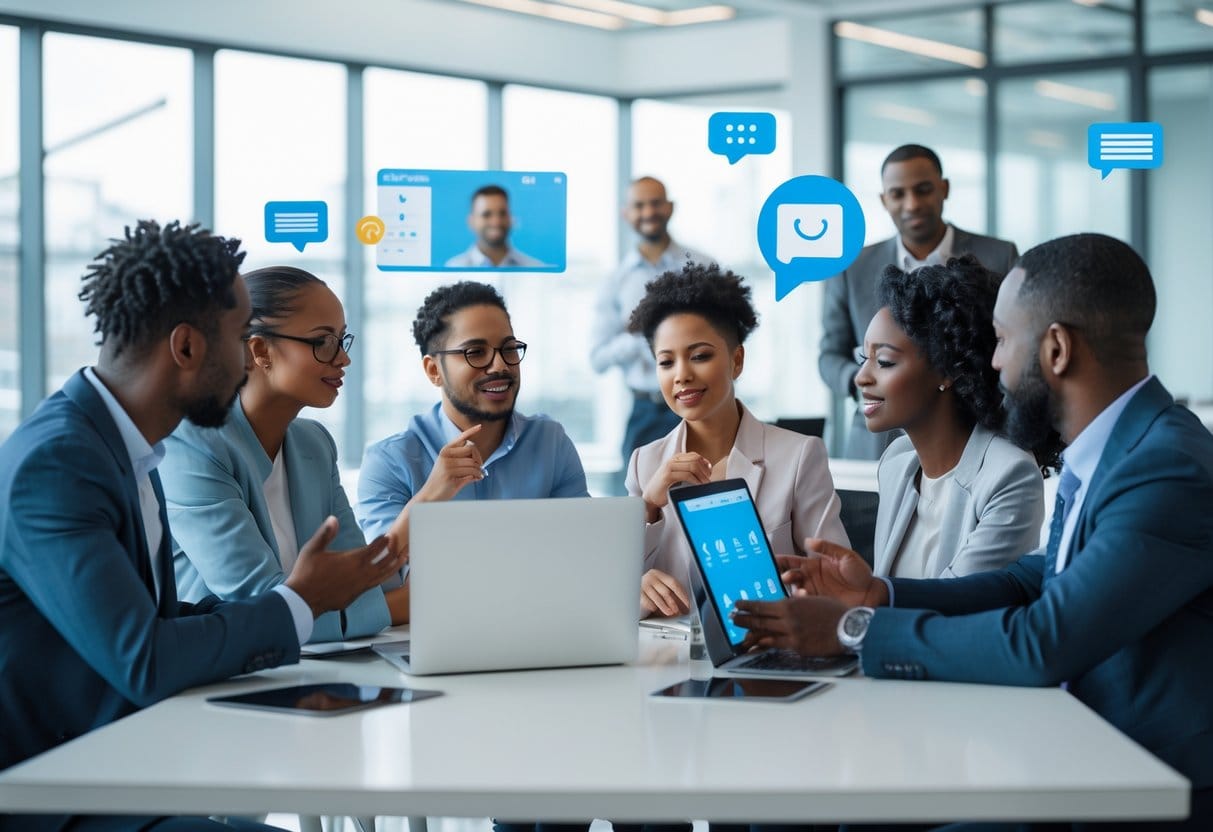
Advances in technology have changed how you share information, work together, and overcome differences in communication style. Your experience with emails, messaging apps, and video calls now shapes the way you connect and interact every day.
Communication Tools Across Generations
Older and younger generations often use different communication tools. While younger people tend to prefer instant messaging, social media, and video calls, many older adults are more comfortable with phone calls and email.
This difference can lead to misunderstandings or missed messages. Facilitating effective communication across age groups often requires introducing new tools gradually or providing training.
For example, organizations may offer workshops to help employees understand the basics of using group chats or collaborative platforms.
List of commonly preferred tools across generations:
| Generation | Preferred Tools |
|---|---|
| Baby Boomers | Phone calls, Email |
| Generation X | Email, Text messages |
| Millennials | Social media, Messaging apps |
| Generation Z | Social media, Video calls |
Bridging these gaps ensures all voices are heard and everyone can contribute.
Digital Communication Platforms
Digital platforms have become central to both personal and professional interactions. Email remains a primary channel for formal messages, project updates, and documentation among organizations.
Social media platforms enable easy sharing of ideas, real-time updates, and broad-reaching engagement. Instant messaging apps, such as WhatsApp, Slack, and Microsoft Teams, support quick, informal exchanges and streamline decision-making.
Video conferencing tools like Zoom and Google Meet connect remote teams, reducing the barriers of distance and time zones. Using multiple digital platforms can help accommodate varying communication preferences and provide flexibility.
Being mindful of platform-specific etiquette can avoid miscommunication or inefficiency.
Impact of Technology on Collaboration
Technology supports smoother collaboration in both local and global settings. Collaborative tools, such as Google Workspace or Microsoft 365, allow team members to co-edit documents, track changes, and leave comments in real time.
Cloud storage services make files accessible from anywhere, making group work more efficient. Social media can also support workplace culture, knowledge sharing, and cross-cultural understanding, fostering broader participation.
You benefit from clearer communication and increased productivity when collaboration tools are selected with your team’s needs and communication styles in mind. Adopting the right mix of technology can reduce misunderstandings and help teams work together more effectively.
Barriers to Effective Communication

Effective communication often faces obstacles that can create confusion and slow down progress. Understanding these barriers can help you address misunderstandings, especially in a diverse workforce where differences and external factors play a major role.
Cultural and Linguistic Challenges
Culture and language shape how you interpret messages and respond to others. In a diverse workplace, different cultural backgrounds can influence communication styles, directness, body language, and even perceptions of authority.
Language barriers can lead to misinterpretations or incomplete exchanges of information. Accents, jargon, and idiomatic expressions sometimes add another layer of complexity.
Key issues to consider:
- Cultural values and communication norms
- Language proficiency differences
- Use of nonverbal cues
- Variations in preferred communication channels (written, spoken, visual)
Cross-cultural misunderstandings are common when assumptions are made based on your own experiences instead of seeking clarification. Training in cultural awareness and providing clear, simple language can help reduce these challenges.
Physical and Environmental Barriers
Physical and environmental factors can impede communication, especially in busy or crowded workplace settings. Noise, poor acoustics, distance, and lack of privacy can all contribute to lost or distorted messages.
Environmental obstacles may include:
| Barrier | Example |
|---|---|
| Noise | Machinery running nearby |
| Poor Lighting | Dim meeting spaces |
| Physical Distance | Remote or virtual meetings |
| Interruptions | Frequent walk-ins or calls |
You might also face issues with technology, such as unreliable internet, malfunctioning microphones, or inadequate video conferencing tools. Addressing these barriers requires careful planning, dedicated spaces for communication, and reliable technical support to help minimize disruption and maintain clarity.
Strategies for Bridging Communication Gaps
Effective communication depends on both listening and making sure everyone is included. Building collaboration means you must recognize different communication needs and adapt actively to bridge gaps.
Active Listening Techniques
Active listening helps you accurately understand others and encourages open dialogue.
When someone speaks, focus your attention fully instead of planning your next response.
Show engagement with eye contact, simple affirmations, and open body language.
Use techniques like paraphrasing or summarizing what you hear:
- “So, what I’m hearing is…”
- “If I understand correctly…”
Ask clarifying questions when something isn’t clear, and avoid interrupting.
This demonstrates respect for others’ viewpoints and helps prevent miscommunication.
Active listening also means being aware of tone, emotions, and nonverbal cues.
Recognize that individuals communicate in unique ways due to personality or background.
By adapting your listening habits, you foster trust, reduce misunderstandings, and improve team collaboration.
Inclusive Communication Practices
Inclusive communication ensures all voices are recognized and valued, especially in diverse or cross-generational teams.
Use clear and simple language so everyone can follow the discussion.
Encourage quieter team members to contribute by inviting their input directly in meetings.
Make meetings accessible with multiple communication channels:
- Written summaries
- Shared documents
- Visual aids
- Digital platforms
Be sensitive to cultural differences by avoiding slang, idioms, or jargon that may not be widely understood.
Give everyone equal time to speak and respond thoughtfully to all contributions, showing appreciation for diverse perspectives.
Inclusive Communication for Organizational Success
Inclusive communication directly impacts organizational success by building trust, improving team effectiveness, and reducing costly issues like high turnover.
A focus on clarity and respect supports lasting collaboration and makes it possible to benefit from a truly diverse workforce.
Enhancing Collaboration in Diverse Teams
Effective communication in diverse teams requires an understanding of different cultural, generational, and linguistic backgrounds.
You can help bridge communication gaps by using straightforward language, encouraging open dialogue, and choosing tools that accommodate various preferences.
Practical steps include:
- Active listening: Give speakers your full attention, clarify when needed, and avoid quick judgments.
- Shared vocabulary: Define key terms, especially when team members have different first languages or work in different departments.
- Transparent expectations: Use written agreements, meeting agendas, and clear messages to minimize misunderstandings.
By fostering respect for differences, you’ll ensure that each team member can fully contribute their skills and insights.
Reducing Turnover Through Better Communication
High turnover is expensive and disruptive, often rooted in misunderstandings or employees feeling unheard.
When communication is inclusive, you create an environment where concerns and ideas are addressed without bias and every team member feels valued.
You can reduce turnover by:
- Regular feedback: Provide opportunities for staff to give and receive honest input, using structured check-ins.
- Addressing accent bias and language barriers: Offer language support and be patient with pronunciation or fluency challenges.
- Promoting fair recognition: Celebrate diverse achievements so all contributions are visible.
Employees who feel respected and included are less likely to leave, resulting in more stable teams and preserved organizational knowledge.
Implementing Communication Strategies in the Workplace
Effective workplace communication depends on both the capabilities of your team and the systems you put in place.
Focusing on training and structured feedback helps build strong communication habits and fosters collaboration.
Training and Skill Development
You can strengthen workplace communication by providing training that targets both technical and interpersonal skills.
Offer workshops on active listening, nonverbal cues, and adapting to different communication styles.
These sessions should be practical and interactive, allowing team members to apply concepts in real scenarios.
Emphasize the importance of cultural sensitivity and inclusion, especially in diverse or global teams.
Visual aids, translated materials, and peer mentorship can make communication accessible for everyone, including employees for whom English is a second language.
Introduce digital communication tools, such as instant messaging apps and project management platforms, and train your team on their proper use.
Demonstrate how each tool supports specific workflows, such as quick updates or detailed project discussions, and encourage consistency in their use.
Provide regular opportunities for employees to practice and refine their skills.
This could include role-playing exercises, team-building activities, or cross-departmental collaboration projects to expose everyone to different communication styles and preferences.
Feedback Mechanisms for Continuous Improvement
Implementing effective feedback systems ensures continuous improvement of communication practices.
Set clear channels for giving and receiving feedback, such as regular one-on-one meetings, anonymous surveys, or digital suggestion boxes.
Encourage honest, constructive feedback that addresses communication barriers without assigning blame.
Present feedback results in simple formats, for example:
| Issue Identified | Action Taken | Result |
|---|---|---|
| Information delays | Added team huddles | Faster responses |
| Misunderstood messages | Training on clarity | Fewer mistakes |
Act on the feedback promptly and transparently, showing teams that their input leads to real change.
Schedule periodic check-ins to gauge the effectiveness of new strategies and adjust as needed.
This ongoing process helps create a culture of trust and openness, laying the groundwork for effective communication across all levels of the workplace.
Frequently Asked Questions
Effective communication in the workplace relies on being aware of generational, gender, and personal differences.
By recognizing these differences, you can develop strategies that encourage better teamwork and reduce the risk of misunderstandings.
What strategies can improve communication between different generations in the workplace?
You can start by promoting open dialogue and encouraging employees to share their preferred ways of communicating.
Training sessions and workshops can help everyone learn about the habits and expectations of each generation.
Mentoring programs that pair employees from different age groups foster networking and understanding.
Using multiple communication platforms, such as email, chat, and in-person meetings, helps ensure all voices are heard.
What are the main differences in communication styles across generations?
Baby Boomers often prefer face-to-face or phone conversations, while Millennials and Gen Z may favor texts, instant messaging, or collaborative online tools.
Older generations might value formal language and structured interactions, whereas younger colleagues typically use more casual language and quick exchanges.
These differences can stem from the technology available during each generation’s upbringing and their workplace experiences.
How can understanding communication styles reduce misunderstandings in a team?
When you are aware of how others prefer to communicate, you can adjust your approach to match their style.
This helps information flow more clearly and prevents assumptions that might lead to conflict.
Active listening, paraphrasing, and regular feedback can further limit misinterpretations.
Using clear, direct language that suits the audience ensures your message is understood as intended.
Why is it important to bridge communication gaps among team members?
Bridging these gaps promotes mutual respect and minimizes workplace conflicts.
When everyone feels heard, team cohesion and productivity increase.
Addressing communication differences also leads to faster problem-solving and stronger collaboration, which benefits project outcomes and employee satisfaction.
What can organizations do to facilitate better communication across diverse age groups?
Organizations should offer training that covers generational traits, communication preferences, and cultural awareness.
Establishing clear guidelines for communication and conflict resolution supports a more inclusive environment.
Regular team-building activities and feedback sessions create opportunities for interaction and help employees adapt to varying styles.
How do gender-specific communication tendencies impact workplace dynamics?
Gender can influence communication styles, such as the use of language, directness, or preference for collaborative approaches. Recognizing these patterns can prevent misunderstandings and reduce unconscious bias during interactions.
Organizations should encourage an environment where diverse communication preferences are respected. Everyone should have equal opportunities to contribute.
Ready to master communication in diverse teams?
Explore these resources:
- Crucial Conversations: Tools for Talking When Stakes Are High by Kerry Patterson et al.
- Nonviolent Communication: A Language of Life by Marshall Rosenberg
- The 5 Love Languages: The Secret to Love that Lasts by Gary Chapman
- Difficult Conversations: How to Discuss What Matters Most by Douglas Stone et al.