Table of Contents
Project management success hinges on meticulous planning and systematic execution. Without a structured approach, even well-intentioned projects can spiral into chaos, missed deadlines, and budget overruns.
The difference between successful and failed projects often comes down to having the right framework in place.

**A comprehensive project checklist serves as your roa
The Role of the Project Checklist in Project Management

Project checklists serve as structured roadmaps that guide teams through complex project execution while ensuring critical tasks remain visible and accountable. They transform abstract project requirements into actionable steps that enhance team coordination and reduce execution risks.
Defining the Project Checklist
A project checklist is a systematic list of essential tasks, milestones, and deliverables required for successful project completion. It functions as both a planning tool and execution guide.
Project checklists range from simple task lists to comprehensive integrated systems within project management software. They document specific actions, deadlines, and responsible parties for each project component.
Core elements of effective project checklists include:
- Task descriptions with clear success criteria
- Assigned responsibilities and ownership
- Dependencies between related activities
- Due dates and milestone markers
- Resource requirements and constraints
The structure adapts to project complexity and organizational needs. Simple projects may require basic task lists, while complex initiatives demand detailed multi-level checklists with interconnected components.
Benefits for Project Teams and Stakeholders
Project checklists deliver measurable advantages that directly impact project success rates and team performance. They create accountability frameworks that keep projects on track.
Primary benefits include:
| Benefit Category | Impact |
|---|---|
| Task Management | Reduces forgotten deliverables by 70-80% |
| Communication | Provides shared visibility across team members |
| Quality Control | Ensures consistent execution standards |
| Risk Reduction | Identifies potential issues before they escalate |
Your project team gains clarity on individual responsibilities and collective progress. Team members can quickly assess completion status and identify bottlenecks requiring attention.
Stakeholders receive transparent progress updates without lengthy status meetings. The checklist format communicates project health through easily understood completion percentages and milestone achievements.
Checklists also standardize processes across similar projects. Your organization builds repeatable frameworks that improve efficiency and reduce planning time for future initiatives.
Integrating Checklists into Project Workflows
Successful checklist integration requires alignment with existing project management processes and team workflows. You must embed checklists at strategic points throughout the project lifecycle.
Integration occurs through three main phases:
- Pre-project: Requirement gathering and scope definition
- Planning: Resource allocation and timeline development
- Execution: Daily task management and progress tracking
Your project management tools should house checklists alongside other project artifacts. Popular platforms like Asana, Monday.com, and Microsoft Project offer built-in checklist functionality that syncs with project timelines.
Team adoption improves when checklists connect to existing communication channels. Integrate checklist updates with Slack notifications, email alerts, or dashboard displays that your team already monitors.
Regular checklist reviews during team meetings ensure items remain current and actionable. Schedule weekly assessments to add new tasks, remove completed items, and adjust priorities based on project evolution.
Establishing Clear Project Goals and Objectives

Well-defined project goals serve as the foundation for successful project execution, requiring measurable outcomes that align with stakeholder expectations while preventing scope expansion.
Setting Measurable Objectives
Your project goals must follow the SMART framework to ensure clarity and trackability. Specific objectives define exactly what you will accomplish, while measurable criteria establish clear success metrics.
Create objectives that are achievable within your resource constraints and timeline. Each project goal should directly relate to your organization’s broader strategy and business needs.
Time-bound elements provide urgency and structure to your objectives. Set specific deadlines for each milestone and deliverable to maintain project momentum.
Use quantifiable metrics wherever possible. Instead of “improve customer satisfaction,” specify “increase customer satisfaction scores by 15% within six months.”
Document each objective with clear acceptance criteria. This prevents confusion during project execution and provides concrete benchmarks for success evaluation.
Aligning Project Goals with Stakeholder Expectations
Engage your project sponsor and key stakeholders during the goal-setting phase. Their input ensures your objectives reflect actual business needs and organizational priorities.
Schedule dedicated alignment sessions with each stakeholder group. Document their specific expectations, success criteria, and any concerns about project outcomes.
Key stakeholder categories to consider:
- Executive sponsors
- End users
- Department heads
- Technical teams
- External clients
Create a stakeholder expectation matrix that maps each group’s priorities to your project goals. This visual tool helps identify potential conflicts before they impact execution.
Regular check-ins maintain alignment throughout the project lifecycle. Schedule brief updates to confirm stakeholder expectations remain consistent with your established objectives.
Preventing Scope Creep
Define your project boundaries explicitly in your goal documentation. Clear scope statements prevent unauthorized additions that can derail timelines and budgets.
Establish a formal change control process before project launch. Any modifications to your original project goals must follow this structured approval pathway.
Essential scope control elements:
- Written change requests
- Impact assessments
- Stakeholder approval requirements
- Budget and timeline implications
Train your team to identify and escalate potential scope changes immediately. Early detection allows for proper evaluation before unauthorized work begins.
Create a scope baseline document that captures your original project goals and deliverables. This reference point helps evaluate whether new requests represent legitimate changes or scope creep.
Defining Project Scope and Deliverables
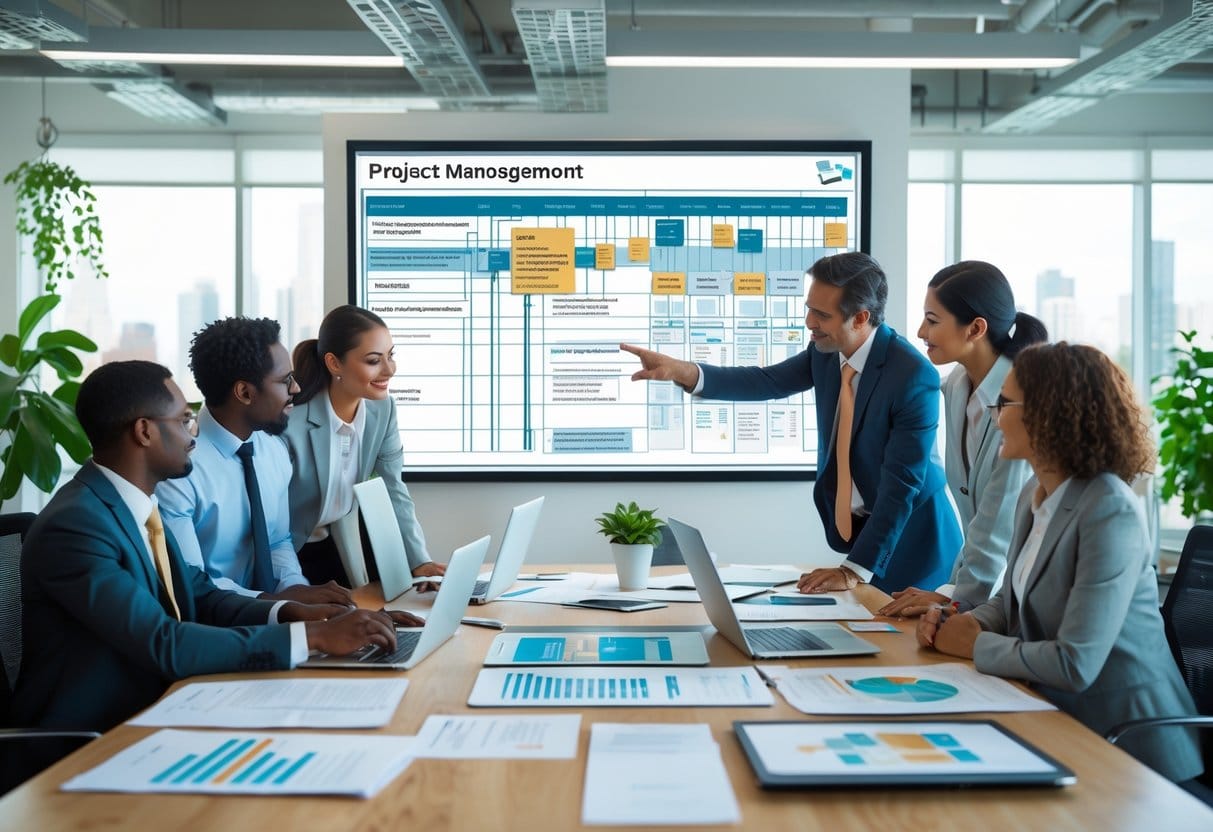
Project scope establishes the exact boundaries of your work and defines what you will deliver to stakeholders. Clear deliverables prevent scope creep and ensure your team stays focused on agreed-upon outcomes.
Clarifying Boundaries and Requirements
Project scope documentation starts with listing what your project includes and what it excludes. You need to specify the exact work your team will perform and identify activities that fall outside the project boundaries.
Begin by gathering requirements from all stakeholders through interviews and workshops. Document functional requirements that describe what the system or solution must do.
Record non-functional requirements such as performance standards and security needs.
Essential scope elements include:
- Project objectives and success criteria
- Specific deliverables with acceptance criteria
- Resource constraints and budget limits
- Timeline boundaries and key deadlines
- Quality standards and compliance requirements
Define exclusions explicitly to prevent misunderstandings. State what services, features, or activities your project will not address.
This prevents stakeholders from assuming work is included when it falls outside your defined boundaries.
Work Breakdown Structure
A work breakdown structure divides your project scope into manageable components. You create a hierarchical decomposition that breaks deliverables into smaller work packages your team can estimate and execute.
Start with major deliverables at the top level. Break each deliverable into sub-deliverables or work packages.
Continue decomposing until you reach tasks that take 8-80 hours to complete. Each work package should produce a specific output.
Assign clear ownership to team members for accountability. Link work packages to project milestones that mark significant completion points.
| Level | Example |
|---|---|
| Level 1 | Website Development |
| Level 2 | User Interface Design |
| Level 3 | Homepage Layout |
| Level 4 | Header Design |
Your work breakdown structure becomes the foundation for scheduling and resource allocation. It helps you identify dependencies between tasks and estimate effort accurately.
Validating Deliverables with Stakeholders
Stakeholder validation ensures your deliverables meet expectations and requirements. You need formal approval processes that confirm each deliverable satisfies its acceptance criteria before moving to the next phase.
Schedule regular review sessions with key stakeholders throughout the project. Present deliverables in their current state and gather feedback.
Document any changes or corrections needed before final approval. Create acceptance criteria for each deliverable that specify measurable standards.
Include performance metrics, quality thresholds, and functionality requirements. These criteria become the basis for stakeholder sign-off.
Establish a change control process for scope modifications. Require written approval for any additions or changes to deliverables.
Assess the impact of changes on timeline, budget, and resources before implementation. Use project milestones as formal checkpoints where stakeholders review and approve completed deliverables.
This approach prevents major revisions late in the project and maintains alignment with stakeholder expectations.
Comprehensive Project Planning Essentials

Effective project planning requires a structured approach that encompasses strategic plan development, realistic timeline creation, optimal resource distribution, and appropriate tool selection. These foundational elements work together to establish clear project boundaries and execution pathways.
Developing the Project Plan
Your project plan serves as the central document that guides all project activities from initiation to closure. Start by defining the project scope statement, which clearly outlines what the project will and will not accomplish.
Include specific project requirements, quality criteria, and success metrics in your plan. Document the project’s objectives using measurable outcomes that stakeholders can evaluate.
Establish a detailed budget breakdown that accounts for all project costs including labor, materials, and overhead expenses. Create contingency plans for potential risks and issues.
Your project plan should also define roles and responsibilities for each team member. Include communication protocols and reporting structures to ensure information flows efficiently throughout the project lifecycle.
Document the project’s deliverables with clear acceptance criteria. This prevents scope creep and ensures all parties understand what constitutes project completion.
Building a Project Timeline
A well-constructed project timeline breaks down complex projects into manageable phases and tasks. Begin by identifying all necessary activities and their dependencies.
Use work breakdown structures to decompose large deliverables into smaller, actionable tasks. Estimate duration for each task based on historical data and team capacity.
Identify critical path activities that directly impact your project’s completion date. These tasks require close monitoring and cannot be delayed without affecting the overall timeline.
Build buffer time into your schedule for unexpected delays or changes. Factor in team availability, holidays, and potential resource conflicts when setting task durations.
Create milestone markers at key project phases to track progress effectively. Schedule regular review points where you can assess timeline adherence and make necessary adjustments.
Resource Allocation Strategies
Strategic resource allocation ensures your team has the necessary skills, tools, and materials to complete project tasks efficiently. Conduct a thorough analysis of required resources before project execution begins.
Map team member skills to specific project requirements. Consider both technical capabilities and availability when assigning tasks to ensure optimal productivity.
Balance workloads across team members to prevent burnout and maintain consistent progress. Monitor resource utilization regularly and redistribute tasks when necessary.
Plan for external resources such as contractors, equipment, or specialized services well in advance. Secure commitments and contracts to avoid delays during critical project phases.
Establish clear protocols for requesting additional resources when project scope expands or unexpected challenges arise.
Selecting Project Management Tools
Choose project management software that aligns with your team’s workflow and project complexity. Evaluate tools based on features like task tracking, collaboration capabilities, and reporting functions.
Consider cloud-based platforms that enable real-time collaboration and remote access for distributed teams. Ensure the selected tools integrate with existing systems and workflows.
Implement communication tools that support your project’s collaboration requirements. Select platforms that offer file sharing, messaging, and video conferencing capabilities.
Train team members on selected project management tools before project launch. Establish standards for tool usage and data entry to maintain consistency across the project.
Regularly assess tool effectiveness and gather team feedback. Be prepared to adjust or replace tools that don’t meet project needs or hinder productivity.
Risk Assessment and Mitigation Strategies

Effective project execution requires systematic identification of potential threats and development of response strategies. Quality standards serve as both protective measures and benchmarks throughout the risk management process.
Identifying Risks and Potential Impacts
Risk identification forms the foundation of your project’s defense system. You must examine every aspect of your project timeline, budget, resources, and stakeholder requirements.
Start with a comprehensive risk register. Document technical risks like system failures or integration challenges.
Include external factors such as vendor delays, regulatory changes, or market shifts.
Common Risk Categories:
- Technical: Software bugs, hardware failures, compatibility issues
- Operational: Resource shortages, skill gaps, process breakdowns
- External: Supplier problems, regulatory changes, economic factors
- Schedule: Unrealistic timelines, dependency conflicts, scope creep
Assess each risk’s probability and potential impact using a standardized scale. High-probability, high-impact risks demand immediate attention and detailed mitigation plans.
Consider cascading effects where one risk triggers multiple problems. A key team member leaving might delay deliverables, increase costs, and reduce quality simultaneously.
Risk Management Planning
Your risk management plan transforms identified threats into actionable response strategies. Develop specific tactics for each significant risk based on four core approaches.
Risk Response Strategies:
| Strategy | Description | When to Use |
|---|---|---|
| Avoid | Eliminate the risk entirely | High impact, controllable risks |
| Mitigate | Reduce probability or impact | Manageable, moderate risks |
| Transfer | Shift risk to third parties | Specialized or insurable risks |
| Accept | Monitor without active response | Low impact, unavoidable risks |
Assign risk owners who monitor specific threats and execute response plans. Establish trigger points that activate mitigation measures before risks become critical issues.
Create contingency budgets and schedule buffers for high-priority risks. Document escalation procedures that define when to involve senior management or external resources.
Update your risk register regularly as project conditions change. New risks emerge while others become obsolete throughout the project lifecycle.
Ensuring Quality Standards
Quality standards serve as both risk prevention mechanisms and success metrics. Establish clear quality criteria that align with project objectives and stakeholder expectations.
Implement quality gates at critical project milestones. These checkpoints prevent defective work from progressing and compound into larger problems later.
Key Quality Control Measures:
- Peer reviews for all deliverables
- Automated testing for technical components
- Regular stakeholder feedback sessions
- Compliance audits against requirements
Monitor quality metrics continuously rather than waiting for final deliverables. Early detection allows for corrective action without major schedule or budget impacts.
Document quality standards in measurable terms. Vague requirements like “user-friendly” create interpretation problems that lead to rework and delays.
Team Formation and Effective Communication
Successful project execution depends on assembling the right team members and establishing clear communication channels. A well-structured communication plan and appropriate collaboration tools form the foundation for coordinated project delivery.
Assembling the Project Team
Building your project team requires strategic planning and deliberate selection of members with complementary skills. Start by identifying the specific roles and expertise needed to achieve your project objectives.
Core team roles typically include:
- Project manager to oversee execution
- Subject matter experts for technical guidance
- Stakeholder representatives for decision-making
- Quality assurance specialists for deliverable validation
Consider each team member’s availability, workload, and commitment level. Part-time contributors can create bottlenecks if not managed properly.
Establish clear role definitions and responsibilities from the start. Document who handles what tasks and decision-making authority for each team member.
Team formation checklist:
- Define required skills and expertise
- Identify available resources
- Confirm team member availability
- Set role boundaries and responsibilities
- Plan team onboarding process
Project Communication Plan
Your project communication plan defines how information flows between team members and stakeholders. This document prevents miscommunication and ensures everyone receives relevant updates at appropriate intervals.
Essential communication plan elements:
| Component | Details |
|---|---|
| Audience | Who needs specific information |
| Message type | Status updates, decisions, issues |
| Frequency | Daily, weekly, or milestone-based |
| Channel | Email, meetings, or collaboration platforms |
| Responsible party | Who sends each communication |
Include escalation procedures for urgent issues. Define which problems require immediate attention versus standard reporting cycles.
Document meeting schedules, agendas, and expected outcomes. Regular touchpoints keep teams aligned and identify potential roadblocks early.
Your communication plan should specify feedback mechanisms. Team members need clear ways to raise concerns or suggest improvements.
Tools for Collaboration
Modern project teams rely on digital tools to coordinate work and maintain visibility into progress. Choose platforms that match your team’s technical comfort level and project complexity.
Kanban boards provide visual workflow management by showing tasks in different stages. Team members can see work progress and identify bottlenecks quickly.
Popular collaboration platforms include:
- Slack or Microsoft Teams for instant messaging
- Asana or Trello for task management
- Zoom or Google Meet for video conferences
- SharePoint or Google Drive for document sharing
Establish tool usage guidelines and training. Inconsistent adoption reduces effectiveness and creates information silos.
Set up automated notifications for critical updates. Teams can stay informed without constant manual check-ins.
Integrate tools where possible to reduce switching between applications. Many platforms offer native connections or third-party integrations.
Execution, Monitoring, and Adaptation
Project execution requires disciplined implementation of your project schedule while maintaining constant oversight of progress through systematic monitoring. Successful adaptation depends on your ability to identify deviations early and adjust plans before small issues become major problems.
Implementing the Project Schedule
Your project schedule transforms planning into action through systematic task execution. Start by communicating the schedule to all team members, ensuring everyone understands their responsibilities and deadlines.
Break down complex tasks into manageable daily activities. This prevents team members from feeling overwhelmed and provides clear direction for what needs completion each day.
Key implementation steps:
- Assign specific start and end dates for each task
- Define resource requirements before tasks begin
- Establish clear handoff points between team members
- Create backup plans for critical dependencies
Monitor task sequencing carefully. Dependencies create bottlenecks when previous tasks run late, so address delays immediately rather than hoping they resolve themselves.
Schedule regular check-ins with team members. Brief daily or weekly meetings prevent miscommunication and keep everyone aligned with current priorities.
Document any changes to the original schedule immediately. This maintains accountability and helps you track which adjustments worked effectively for future projects.
Monitoring Progress and Key Milestones
Project monitoring involves systematic tracking of actual progress against planned milestones. Effective monitoring requires consistent data collection and analysis to identify potential issues before they impact project success.
Establish specific metrics for each milestone. Measurable criteria eliminate ambiguity about whether you’ve achieved project milestones successfully.
Essential monitoring elements:
- Task completion percentages
- Budget expenditure rates
- Quality standards compliance
- Resource utilization levels
Use project management software to automate progress tracking. Manual tracking becomes unreliable as project complexity increases and team size grows.
Review milestone achievement weekly. This frequency allows you to spot trends and patterns that monthly reviews might miss entirely.
Create visual dashboards that display project status clearly. Team members respond better to visual representations than lengthy written status reports.
Document reasons for any milestone delays. This information helps you make better decisions about resource allocation and timeline adjustments.
Adjusting Plans and Timelines
Project adaptation requires swift response to changing circumstances while maintaining project objectives. Your ability to adjust plans effectively determines whether temporary setbacks become permanent failures.
Analyze the root cause before making adjustments. Surface-level fixes often create additional problems later in the project timeline.
Common adjustment triggers:
- Resource availability changes
- Scope modifications
- Technical challenges
- External dependency delays
Communicate changes to all stakeholders immediately. Delayed communication creates confusion and reduces team confidence in project leadership.
Update your project schedule formally after making timeline adjustments. Informal changes lead to misaligned expectations and missed deadlines.
Consider the ripple effects of each adjustment. Changes to one task often impact multiple other activities downstream.
Prioritize critical path activities when resources become constrained. Non-critical tasks can accommodate delays without affecting overall project completion dates.
Managing Budget and Resources
Effective budget estimation and resource tracking form the foundation of project financial control. These practices prevent cost overruns and ensure optimal allocation throughout the project lifecycle.
Estimating and Controlling Project Budget
Project budget estimation requires analyzing scope, timeline, and deliverables to create accurate financial projections. Start by breaking down your project into specific work packages and estimate costs for each component.
Create contingency reserves to handle unexpected expenses. Most projects benefit from a 10-20% buffer depending on complexity and risk level.
Key Budget Control Methods:
- Weekly budget reviews to track actual vs. planned spending
- Milestone-based approvals for major expenditures
- Variance thresholds that trigger corrective action
- Regular stakeholder reporting on financial status
Monitor your project budget continuously rather than waiting for monthly reports. Set up automated alerts when spending approaches predetermined limits.
Document all budget changes and their justifications. This creates accountability and helps future projects learn from your financial decisions.
Resource Tracking Methods
Resource allocation encompasses both human resources and materials needed for project completion. Track team member availability, skill requirements, and equipment needs throughout each project phase.
Use resource calendars to identify potential conflicts before they impact your timeline. This prevents overallocation and reduces project delays.
Effective Tracking Approaches:
- Resource utilization reports showing current capacity
- Skills matrices matching team capabilities to tasks
- Equipment schedules preventing resource conflicts
- Cost per resource tracking for budget accuracy
Implement regular check-ins with team members to assess workload and availability. Adjust resource allocation based on actual progress rather than initial estimates.
Maintain a resource database that captures lessons learned for future project planning. This improves estimation accuracy over time.
Post-Project Activities and Continuous Improvement
Project completion marks the beginning of critical evaluation activities that drive organizational growth. Systematic documentation of experiences and strategic market analysis create the foundation for enhanced future performance.
Capturing Lessons Learned
Document project outcomes immediately after completion while details remain fresh. Create a structured review process that examines both successful strategies and problematic areas.
Key Documentation Areas:
- Budget variances and their root causes
- Timeline deviations and contributing factors
- Resource allocation effectiveness
- Communication breakdowns or successes
Conduct team debriefing sessions within one week of project closure. Record specific examples rather than general observations.
For construction projects, document material performance, contractor reliability, and regulatory compliance issues. Include photos and measurements to support findings.
Lessons Learned Template:
| Category | What Worked | What Didn’t | Action Items |
|---|---|---|---|
| Budget | Accurate steel estimates | Underestimated labor | Update cost databases |
| Schedule | Early site preparation | Weather delays | Build buffer time |
| Quality | Rigorous inspections | Material defects | Vendor evaluation |
Store lessons learned in an accessible database that project teams can reference during planning phases. Regular review of historical data prevents recurring mistakes and reinforces successful practices.
Conducting Market Research for Future Projects
Analyze market conditions and trends that emerged during project execution. Research client satisfaction levels and identify unmet needs in your target markets.
Survey stakeholders about changing requirements and future project expectations. Focus on specific feedback about deliverables, timelines, and communication preferences.
Research Focus Areas:
- Technology trends affecting your industry
- Regulatory changes impacting project requirements
- Competitive landscape shifts and new market entrants
- Client budget patterns and spending priorities
For construction projects, investigate new building materials, sustainability requirements, and local zoning developments. Monitor permit processing changes and inspector feedback patterns.
Compile market intelligence into actionable insights for business development teams. Update project templates and estimation models based on discovered market shifts.
Create quarterly reports combining lessons learned with market research findings. This integration helps identify whether project challenges stem from internal processes or external market conditions.
Frequently Asked Questions
Project checklists address common concerns about maintaining consistency, managing complexity, and avoiding critical oversights during project execution. These questions focus on essential components, planning strategies, communication methods, and monitoring techniques that ensure successful project delivery.
What are the key components of a project checklist to ensure flawless execution?
Your project checklist should include clear project objectives with measurable success criteria. Define specific deliverables, timelines, and quality standards for each phase.
Include stakeholder identification and communication protocols. Document who needs information, when they need it, and through which channels.
Add resource allocation details covering team members, budget constraints, and required tools or materials. Track dependencies between tasks to prevent bottlenecks.
Incorporate risk assessment items that identify potential issues and mitigation strategies. Include approval gates and decision points throughout the project lifecycle.
How do detailed project plans contribute to the success of project implementation?
Detailed project plans provide a roadmap that eliminates guesswork and reduces uncertainty. They establish clear expectations for team members and stakeholders.
Your plan should break complex projects into manageable tasks with specific deadlines. This approach helps identify resource requirements and potential scheduling conflicts early.
Detailed planning enables better cost estimation and budget control. You can allocate resources more efficiently when you understand the full scope of work required.
Plans serve as reference documents during execution, helping teams stay aligned with original objectives. They also provide benchmarks for measuring progress and identifying deviations.
What strategies can be implemented to maintain focus and direction throughout a project’s lifecycle?
Establish regular checkpoint meetings to review progress against your original plan. These sessions help identify drift from objectives before it becomes problematic.
Use visual project management tools that display current status and upcoming milestones. Dashboards and progress charts keep team members informed about project direction.
Implement change control processes that evaluate proposed modifications against project goals. Document all approved changes and communicate them to relevant team members.
Create regular reporting schedules that highlight key metrics and deliverable status. Consistent communication reinforces project priorities and maintains team alignment.
What role does risk management play in the planning and execution of a project?
Risk management helps you identify potential issues before they impact your project timeline or budget. Early identification allows for proactive rather than reactive responses.
Your risk assessment should evaluate both probability and potential impact of identified threats. Prioritize risks based on their overall threat level to project success.
Develop contingency plans for high-priority risks that include specific response actions. Assign risk owners who monitor conditions and trigger responses when needed.
Regular risk reviews throughout project execution help identify new threats and assess the effectiveness of mitigation strategies. Update your risk register as project conditions change.
How does effective team communication contribute to project execution without flaws?
Clear communication channels prevent misunderstandings that can lead to rework or missed deadlines. Establish standard communication protocols for different types of information.
Regular team meetings ensure everyone understands current priorities and upcoming tasks. These sessions provide opportunities to address questions and resolve conflicts quickly.
Document important decisions and share them with relevant team members. Written records prevent confusion about project direction and approved changes.
Use collaborative tools that provide real-time visibility into project status and task assignments. Transparency helps team members coordinate their work more effectively.
Can you outline the steps for monitoring project progress and maintaining quality control?
Establish key performance indicators that measure progress toward project objectives. Track metrics such as task completion rates, budget utilization, and milestone achievement.
Implement regular review cycles that compare actual progress against planned schedules. Identify variances early and determine whether corrective action is needed.
Create quality checkpoints at critical project phases that verify deliverables meet established standards. Define acceptance criteria before work begins to ensure clarity.
Use project management software that provides real-time status updates and automated reporting. These tools help you maintain visibility without creating administrative burden for team members.
Ready to implement the Project Checklist and achieve flawless execution?
Explore these resources:
- The Checklist Manifesto: How to Get Things Right by Atul Gawande;
- Getting Things Done (GTD) by David Allen;
- Agile Project Management for Dummies by Mark C. Layton